
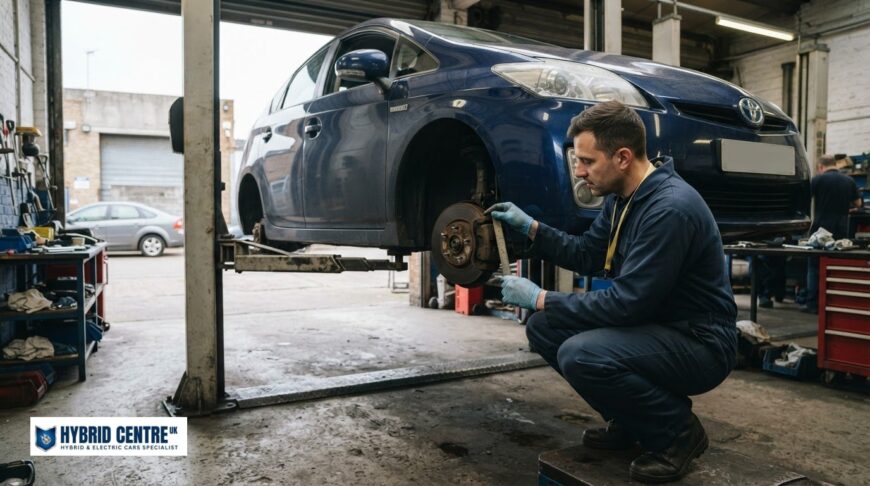

If your brakes feel different, arrange an inspection promptly. For brake repair in London, book a mechanic’s check if the pedal feels spongy, the car pulls to one side, or braking causes squeaking or grinding.
You don’t need to diagnose the fault yourself. A brake inspection can assess pad thickness, disc condition, calipers, hoses, pipes and brake fluid to identify the repair needed. Grinding can mean worn pads are contacting the disc and requires urgent attention. This guide explains what to tell the garage when booking, how an inspection identifies the work required, why vehicle design, disc type, corrosion and seized fixings can affect the repair plan, and what to consider when arranging mobile brake pad and disc replacement in London.
Key Takeaways
- Book a brake inspection promptly if the pedal feels spongy, the car pulls under braking, or you hear squeaking or grinding.
- Find out which brake components a technician checks, including callipers, pipes and hoses.
- Understand how the required work, vehicle design and corrosion can affect a repair quote.
- Learn what can influence whether brake pad and disc replacement can be carried out at your location.
How do I book a brake repair or check?
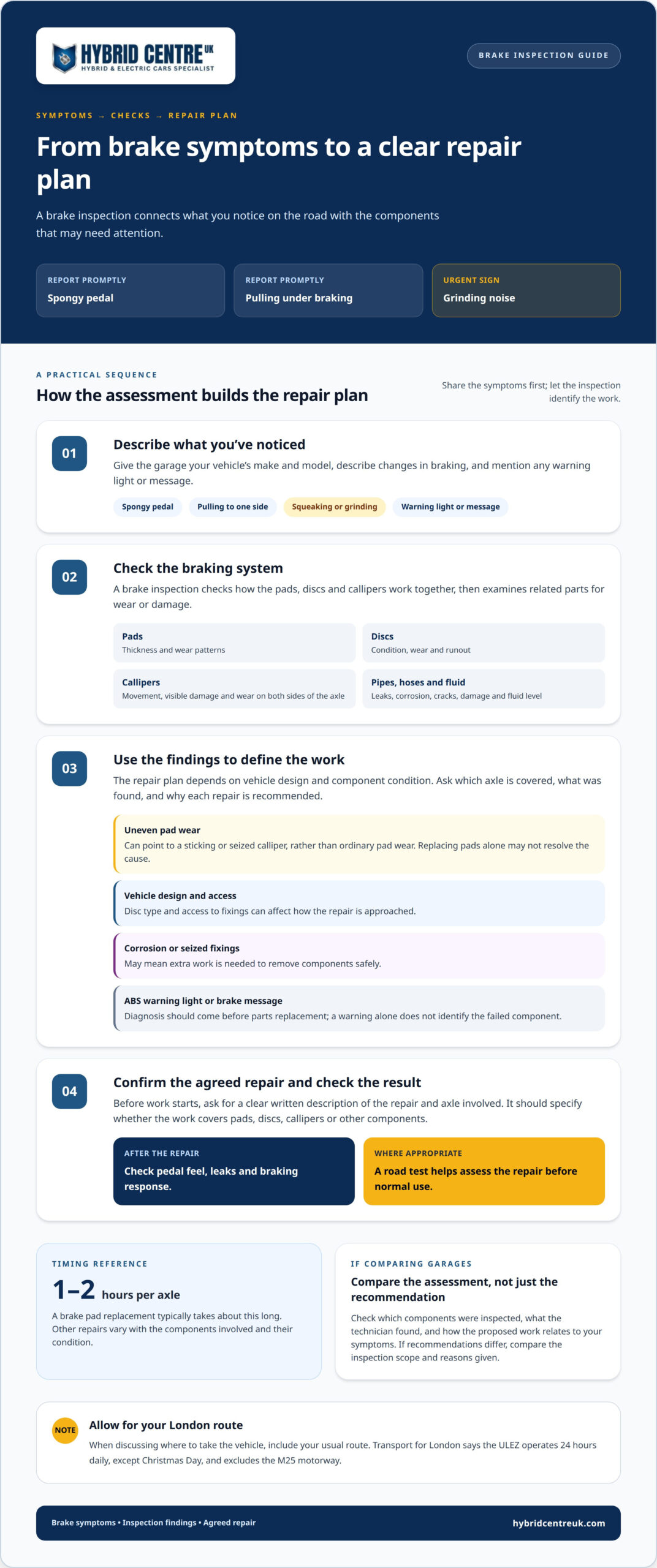
Book a mechanic’s inspection promptly if braking feels different, the pedal feels spongy or you hear grinding. When arranging the appointment, give the garage your vehicle’s make and model, describe the symptoms and mention any warning light.
According to Transport for London, London’s ULEZ operates 24 hours daily, except Christmas Day, and excludes the M25 motorway. Include your usual route when discussing where to take the vehicle.
MOT and pre-MOT brake checks
An MOT brake check assesses whether the braking system meets the test standard. A pre-MOT check can identify issues such as worn pads, disc damage, uneven wear, seized calipers, or corroded pipes and hoses. Ask the garage to explain its findings and specify which components need attention. That gives you a clearer picture before deciding on any work.
Brake fluid checks
A brake fluid check assesses the fluid level and looks for signs of leakage. Brake fluid absorbs moisture over time, which can reduce braking performance and increase the risk of corrosion inside the system. Tell the technician if you’ve noticed a change in pedal feel. The check can help determine whether the fluid needs attention or another part of the braking system needs investigation.
Inspection arrangements and repair times
London garages set their own inspection and assessment arrangements. When booking, clarify what the brake check covers and how the findings will be explained. A brake pad replacement typically takes about 1 to 2 hours per axle. Other repairs take varying amounts of time, depending on the components involved and their condition. Mention grinding, warning lights or pulling under braking so the technician can assess those symptoms.
Caliper, brake pipe and hose repairs
A brake inspection assesses how the pads, discs and calipers work together. The pads press against the discs, also called rotors, creating friction that slows the car. A technician measures pad thickness and checks each disc’s condition and runout. Uneven pad wear can indicate a sticking or seized caliper, rather than ordinary pad wear. These checks help identify which parts need attention before braking performance worsens.
Calipers press the pads against the discs. If a caliper seizes, the pads may wear unevenly and the affected wheel may not brake as expected. A technician checks caliper movement, visible damage and wear patterns on both sides of the axle. Comparing the left and right components can help distinguish a fault on one side from wear on both. The inspection findings show whether the repair involves pads, a disc, a caliper or several components.
Brake pipes and hoses also need inspection. Pipes carry brake fluid through the system, while flexible hoses carry it to the calipers to apply the pads. A technician looks for leaks, corrosion, cracks and other visible damage. A leak or damaged hose can affect the system’s ability to transfer braking force. The condition of fittings and surrounding components also helps determine the repair needed.
Disc checks include looking for wear and measuring runout, which describes how much a disc deviates as it rotates. Excessive wear or runout can affect contact between the disc and pads. If a caliper has seized, replacing the pads alone may not resolve the cause of uneven wear. Ask for the inspection results and an explanation of how each recommended repair relates to the symptoms. This gives you a clear basis for deciding which work to approve.
Factors affecting brake repairs
The work required depends on your vehicle’s design and the condition of its braking components. A clear assessment explains which repair steps are relevant.
Work required per axle
Ask which axle the inspection covers and whether the proposed work applies to one or both sides. Brake components are assessed in relation to the vehicle’s design, so disc type and access to fixings can affect the repair. Corrosion or seized fixings may also mean extra work is needed to remove components safely.
Vehicle size and the parts fitted can affect how a technician approaches the job. If an ABS warning light or brake message appears, diagnosis should come before parts replacement. A warning alone does not identify which component has failed. Ask for an explanation of the assessment steps and how they relate to your vehicle’s symptoms.
Choosing a London repair service
Compare how each garage assesses the braking system and explains its recommendations. A useful assessment describes the components checked, the findings and the reason for each proposed repair. It should distinguish diagnosis from the repair itself, so you understand what has been identified before authorising work.
Give the garage your vehicle’s make and model, any warning messages, and details of changes you’ve noticed while driving. This helps the technician consider vehicle-specific parts and symptoms during the assessment. If two garages recommend different work, compare the inspection scope and reasons given.
Before work starts, ask for a clear written description of the agreed repair and the axle involved. It should specify whether the job covers pads, discs, calipers or other components. This record helps avoid misunderstandings about the work and gives you a practical reference when reviewing the completed repair.
Mobile brake pad and disc replacement in London
Mobile replacement can save you a trip to a garage when the repair is suitable for your location. An inspection establishes whether the pads, discs or other components need attention.
Mobile brake replacement
A mobile technician can assess the braking system and replace worn pads or discs when the repair suits the vehicle and location. The work depends on the inspection findings, including disc condition and whether other faults are present. Tell the booking team about grinding, a spongy pedal or changes in braking. Grinding can mean worn pads are making metal-to-metal contact with the disc, so treat it as urgent.
Brake repairs generally involve replacing worn parts, not the entire braking system. After the work, pedal feel, leaks and braking response should be checked, with a road test where appropriate. These checks help assess the repair before the vehicle returns to normal use.
Pad and disc replacement intervals
Replacement timing varies with driving conditions, vehicle use and component wear. Brake pads usually last between 20,000 and 60,000 miles, while discs last roughly 50,000 miles. These figures are guides, not a substitute for checking their actual condition. Manufacturer maintenance guidance and inspection findings help determine when replacement is due.
A technician may recommend replacing pads before they are fully worn. The decision can depend on the remaining material and whether the discs show wear or damage. Replacing pads and discs together may be appropriate when both need attention.
Brake pad replacement
Pad replacement involves removing the worn pads, assessing related components and fitting replacements suited to the vehicle. The technician should check the discs and calipers as part of the job, since uneven wear can indicate another fault. Replacing pads alone may not resolve a sticking caliper or damaged disc.
A brake pad replacement typically takes about 1 to 2 hours per axle. Ask for the inspection findings and confirmation of which axle the work covers. Arrange an inspection promptly if grinding or a spongy pedal is present.
Hybrid Centre UK: Brake & Suspension
Hybrid Centre UK provides Brake & Suspension repairs for worn pads, damaged discs and other braking faults. An inspection helps identify the components involved and the work needed, so you can make an informed decision before repairs begin.
If warning lights or unusual braking behaviour need further investigation, Advanced Diagnostics can help assess the fault. You can also arrange a Car Service or MOT Service alongside brake work when due. For hybrid vehicles, Hybrid Battery support is available for battery-related concerns.
Contact Hybrid Centre UK to discuss a brake check or repair for your vehicle.
Plan your next brake check
Use the inspection findings to plan your next step instead of waiting for a change in braking behaviour to become more pronounced. If you drive a hybrid, describe any battery concern separately from the brake symptoms. Hybrid Centre UK also offers Advanced Diagnostics, Car Service and Hybrid Battery support for these distinct vehicle needs.
For brake repair in London, a clear account of what you’ve noticed helps the team understand the reason for your booking. Hybrid Centre UK’s technicians can assess the braking concern and explain the relevant repair work. If you’re ready to arrange a check, contact Hybrid Centre UK to book. Take the next step with a clear description of your vehicle’s symptoms.
Frequently Asked Questions
What are brake pads?
Brake pads are components of a vehicle’s braking system that wear with use and may need replacing. Their friction material gradually wears with normal use, so technicians assess its remaining thickness and look for uneven wear. Wear rates depend on the vehicle and how it is driven. A service record of previous pad work can help the technician assess their condition.
Do you need to find a Brake repairs specialist in London?
Choose a garage that can inspect your braking system and explain its findings; it doesn’t need to specialise exclusively in brakes. Before booking in London, describe your vehicle and its symptoms, then ask what the inspection covers and how the recommended work will be explained. A clear account of the diagnosis helps you understand the proposed repair.
How often should I have my brakes inspected?
Arrange a brake inspection at least once a year, and sooner if you notice a change in braking. You can include it in a scheduled vehicle service and follow the manufacturer’s maintenance instructions for your model. If a warning light appears or the vehicle behaves differently before then, report the change when arranging an assessment rather than waiting for the next scheduled check.
What are the symptoms of brake problems?
Symptoms can include a pulsating pedal or ABS warning light, as well as changes in noise or how the car responds. Note whether the warning appears continuously or intermittently, and whether the pedal sensation occurs under particular braking conditions. Share these details when booking. They can help the technician assess the fault and decide which parts of the system to examine.
What is a caliper?
A caliper is mounted around the brake disc. It houses components that move to apply pressure within the braking assembly, and its seals and moving parts need to remain in good condition. A technician can check for sticking movement or signs of leakage. This helps distinguish a caliper fault from wear elsewhere in the same wheel’s braking components.
What is brake fluid?
Brake fluid is a specialist hydraulic fluid used in a vehicle’s braking system. The correct specification depends on the vehicle, so servicing should follow the manufacturer’s instructions. If the fluid level is low, a technician can assess the system and investigate the cause rather than treating a top-up as a complete repair. Mention any recent change in pedal feel when booking.