
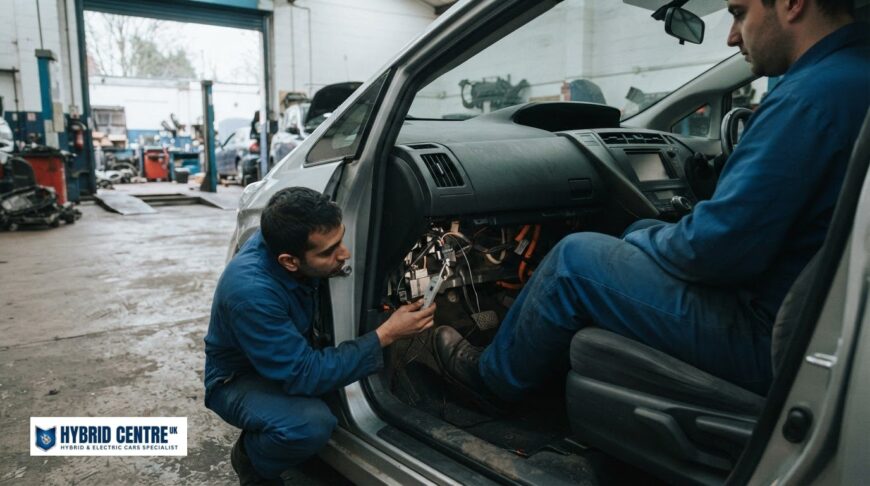

A hybrid that will not start does not automatically need a replacement hybrid battery; the cause may be a weak 12-volt battery, key detection, brake or gear-position controls, or a fault in the hybrid system itself. Knowing how to fix a hybrid car that is not working starts with identifying which system is preventing the vehicle from entering READY mode, then testing the relevant components rather than replacing parts on guesswork.
This guide explains the common reasons a hybrid may fail to start or run properly, which warning signs need prompt attention, and how professional diagnostics help identify the right repair. You’ll also learn what to weigh when deciding whether to repair or replace the battery or vehicle, so you can choose a practical next step based on the fault and the car’s condition.
Key Takeaways
- A brake pedal or switch fault can stop a hybrid from recognising the start command; a specialist can test the switch and related systems.
- Weak 12-volt batteries and high-voltage battery faults affect starting in different ways, so diagnosis needs to identify which system is responsible.
- Warning lights, recurring fault codes or a missing READY indicator can point to a hybrid-specific fault that needs diagnostic equipment.
- Repair or replacement decisions depend on the fault, battery condition and vehicle’s overall state, not just its age or mileage.
How a specialist checks the brake pedal and brake switch
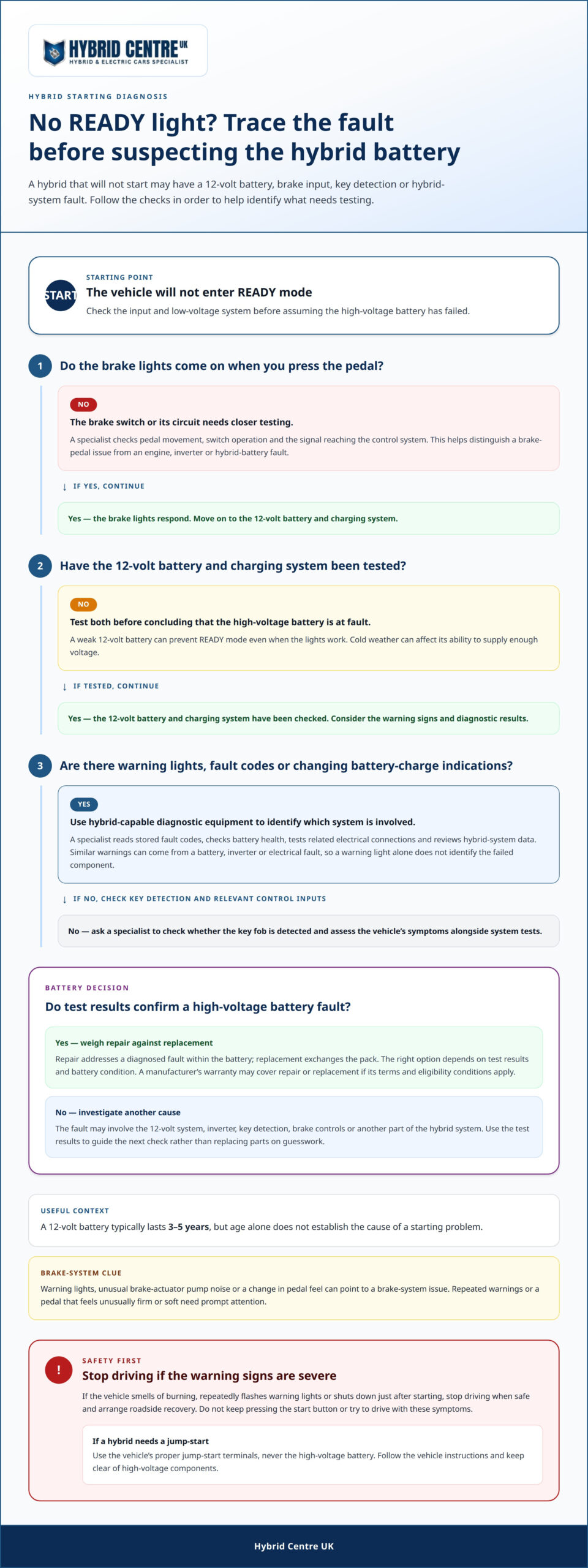
A hybrid may require you to press the brake pedal before the start button activates the system. If the brake switch fails, the vehicle may not register the input or enter READY mode. A specialist checks pedal movement, switch operation and the signal reaching the control system. They also compare dashboard messages with whether the brake lights illuminate. If the lights stay off when you press the pedal, the switch or its circuit needs closer testing. These checks help distinguish a brake-pedal issue from a fault involving the engine, inverter or hybrid battery.
The inspection may also cover the brake actuator pump. This unit supports braking pressure, and wear can cause warning lights, unusual pump noise or a change in pedal feel. A specialist assesses these symptoms alongside stored fault codes and the condition of the brake system. Repeated warnings or a pedal that feels unusually firm or soft need prompt attention. Replacing parts without finding the cause can leave the original problem unresolved and lead to further repair work.
Regenerative braking also affects how a hybrid’s brakes work. The system uses the electric motor to slow the vehicle and recover energy, while friction brakes provide braking when needed. A specialist checks both systems, as reduced brake-pad wear does not rule out a fault in the switch, actuator or braking controls. Hybrid owners may drive 80,000-100,000 miles before replacing brake pads, but wear depends on driving conditions and vehicle use.
During a professional brake inspection, the technician checks whether the pedal returns properly, the switch responds consistently and the brake lights match pedal operation. Diagnostic equipment can reveal related faults that a visual check alone may miss. The specialist then compares the results with the symptoms, such as the car failing to start despite the pedal being pressed properly. This helps identify whether the repair involves the switch, actuator pump or another brake component.
What are the signs of hybrid battery failure?
A hybrid’s 12-volt battery powers low-voltage electronics and control modules, while its high-voltage battery supports the electric motor and hybrid system. A weak 12-volt battery can prevent READY mode even when the lights work; a high-voltage fault may trigger a warning or stop the vehicle starting. An inverter problem affects power conversion, so diagnostic testing helps distinguish it from battery issues.
Battery degradation can show as reduced efficiency, changing battery charge indications or repeated hybrid-system warnings. A high-voltage battery safety fault can prevent startup, and overheating may also stop the system operating. Cold weather can affect the 12 V battery’s ability to supply enough voltage. These symptoms point to different possible problems, so one sign alone does not identify the failed component.
A specialist tests the 12-volt battery and charging system, checks whether the key fob is detected, then reads warning lights and stored fault codes. Battery health readings help distinguish a weak auxiliary battery from a high-voltage pack fault. The technician also checks related electrical connections and hybrid-system data. A 12-volt battery typically lasts 3-5 years, but age alone does not establish the cause.
Hybrid battery repair or replacement may be covered by a manufacturer’s warranty if its terms and eligibility conditions apply. Coverage varies by vehicle and warranty. Repair addresses a diagnosed fault within the battery, while replacement exchanges the pack. The right option depends on test results and battery condition, not the warning light alone.
A hybrid can be jump-started through its proper jump-start terminals, never through the high-voltage battery. A recovery professional follows the vehicle’s instructions and keeps clear of high-voltage components. After a motorway breakdown, stop driving when safe and arrange recovery if the vehicle cannot continue. If battery performance or warning lights remain a concern, hybrid battery assessment can help identify the fault.
When should you call a hybrid specialist?
Contact a specialist if a hybrid warning returns, the READY light stays off or the vehicle stops unexpectedly. Hybrid-specific diagnostics can identify faults that a basic warning light cannot explain.
Hybrid warning lights and diagnostic codes
Hybrid warning lights and diagnostic trouble codes are alerts recorded by the vehicle’s control systems. They matter because a battery, inverter or electrical fault can produce similar dashboard warnings but require different repairs. A specialist reads the codes with hybrid-capable diagnostic equipment and relates them to the vehicle’s symptoms. Toyota issued a safety recall in late 2025 for approximately 55,000 vehicles with an inverter assembly defect, so recall information can also matter when investigating an inverter warning.
Professional diagnosis and repair
Professional hybrid diagnosis combines fault-code readings with system tests to find the cause of a failure. A hybrid-capable scanner can help identify a safety lockout, while further testing assesses related components. Arrange a diagnosis if warning lights keep returning, the vehicle still will not start after battery replacement, or a software or control-module fault returns after a reset. These symptoms need more than repeatedly clearing the warning.
Stop driving and arrange roadside recovery if the vehicle smells of burning, repeatedly flashes warning lights or shuts down just after starting. Don’t keep pressing the start button or try to drive with these symptoms. Repeated restarts can leave you stranded again.
When choosing a hybrid technician in the UK, look for a specialist with hybrid-capable diagnostic equipment and safety training for hybrid systems. For recovery, choose a service equipped to handle a hybrid vehicle and its high-voltage system. Tell the technician or recovery service which warnings appeared and describe the symptoms, including whether the READY light came on.
If a fault code returns after a reset, professional diagnostics can distinguish a temporary alert from an ongoing system fault. A specialist can then base the repair on test results rather than replacing parts solely because a warning light appeared.
How a specialist assesses whether to repair or replace a hybrid
A specialist bases the decision on test results, the vehicle’s condition and the fault’s effect on safe, dependable operation. A dashboard warning alone doesn’t prove the hybrid battery needs replacing. The technician first identifies the fault, checks related components and distinguishes a battery problem from an issue elsewhere in the hybrid system. This helps avoid replacing the battery when repairing another component may resolve the starting failure.
Battery testing helps establish whether the pack has degraded, developed a specific fault or is operating normally. The specialist considers battery health alongside symptoms such as changing charge indications, reduced efficiency and recurring warning lights. If tests identify a repairable fault, hybrid battery repair may be appropriate. If the pack’s condition indicates wider or persistent failure, replacement may be more suitable. The decision should follow test evidence, not a single dashboard message.
The vehicle’s overall condition matters too. A specialist considers whether the engine, gearbox, electrical systems or other major components need attention. For example, a hybrid with a healthy battery but a separate engine fault may need engine repair instead. Similar to the comprehensive inspections coordinated by platforms such as My Auto Shop, a thorough assessment helps you evaluate the whole car and make an informed choice rather than treating the battery as the only concern.
Before agreeing to work, ask for the diagnosis, proposed repair and reason for recommending replacement. A useful assessment connects each suggested job to a test result or observed fault. It should also clarify whether the repair addresses the cause or only one symptom. This helps you compare practical options without relying on the vehicle’s age or a warning light alone.
Choose repair when testing identifies a specific fault with a suitable remedy; consider replacement when results show the battery itself is no longer serviceable. The specialist’s findings and the car’s remaining condition guide that choice. Arrange a hybrid repair assessment to understand which option fits your vehicle.
Hybrid Centre UK
Based in Greenford, London, Hybrid Centre UK helps identify why your vehicle will not start and what repair it needs. If warning lights return, the vehicle fails to enter READY mode or battery tests indicate a fault, its advanced diagnostics can help pinpoint the cause. The team can assess the hybrid battery, electrical systems and the vehicle’s overall condition before recommending suitable work.
Depending on the diagnosis, the work may involve hybrid battery repair, replacement or refurbishment, electrical work, or a vehicle service. Sharing when the fault occurs and which dashboard messages appear helps the technician understand the problem. You can then discuss the test findings and the next repair step.
Contact Hybrid Centre UK to arrange help with your hybrid.
Plan the next step for your hybrid
If you’re still weighing how to fix a hybrid car that isn’t working, base the decision on what you need from the vehicle next. A repair should address the diagnosed fault and give you a clear understanding of any further work identified. This provides a practical basis for deciding whether the car still suits your daily journeys or business use.
Keep the repair findings with the vehicle’s service records. This gives technicians useful context and helps you track how the car performs after the work. Hybrid Centre UK’s technicians can assess your vehicle and explain the appropriate next steps based on their findings.
For help deciding what your hybrid needs, contact Hybrid Centre UK. A clear diagnosis is a sound starting point for getting your plans back on track.
Frequently Asked Questions
How can a specialist fix a hybrid car that is not working?
A specialist matches the repair to the fault found during inspection, then checks the affected system after the work. The solution may involve repairing a component, replacing a damaged part or servicing the vehicle if maintenance issues are involved. Give the technician a clear account of when the problem began and any recent changes in the car’s behaviour.
Is it worth having a hybrid car with high mileage repaired?
High mileage alone doesn’t determine whether a repair makes sense. Consider how the car has been maintained, its current condition and how well it meets your needs. For example, a vehicle with a consistent service history and no other known faults may be a different proposition from one needing several unrelated repairs. A specialist’s findings can help you assess the car as a whole.
What are the most common hybrid car repair issues?
Hybrid repairs can include battery cooling-system maintenance, engine or gearbox repairs, and exhaust or catalytic converter work. Brakes and suspension may also need attention, as they do on conventional vehicles. The symptoms and inspection findings determine what needs work. Regular servicing helps assess the vehicle’s general condition and identify maintenance needs before they affect everyday use.
What should a specialist check if your hybrid car won’t start?
Alongside inspecting the fault, the technician can review the vehicle’s service history and ask when the starting problem occurs. For example, it may happen only after the car has stood unused, or it may follow recent repair work. These details put the current fault in context and help guide a focused inspection. Share any recent changes or previous repairs when booking an assessment.
Why is my hybrid car not turning on?
The cause depends on what “not turning on” means in your case. A car with no response at all presents differently from one whose dashboard powers up but won’t drive. Note which functions still work, whether the engine runs and what happens just before the fault. These observations give the technician useful context without assuming the hybrid battery is responsible.
What are the common reasons a hybrid car will not start or enter Ready mode?
A hybrid may fail to start because a component or control system is preventing normal activation. The precise cause depends on the vehicle and fault, so the same symptom can require different repairs. Record any recent servicing, unusual behaviour or changes in performance. This history helps the technician narrow the inspection and decide which systems to check first.