
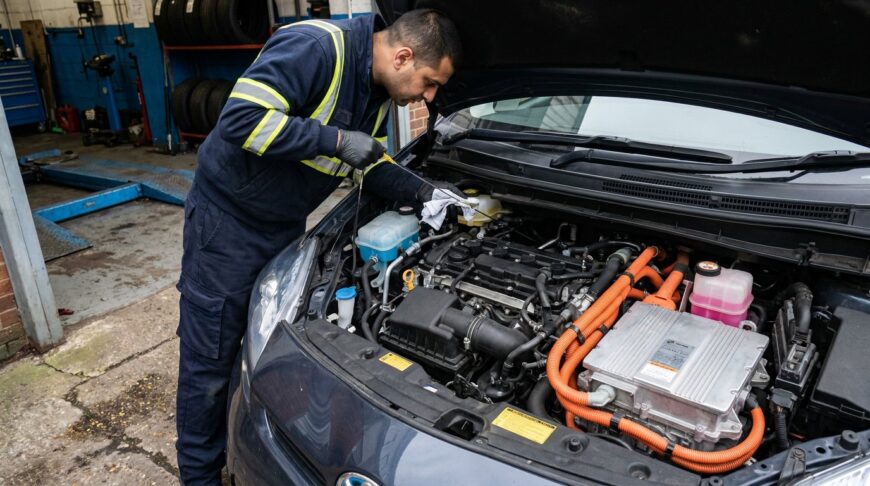

Engine size alone is not the only factor in determining what your hybrid needs: servicing should take account of the vehicle’s maintenance requirements.
A hybrid car service should cover more than a routine engine inspection. Hybrids need attention to the petrol engine, brakes, suspension and steering, as well as checks of battery condition, electrical connections and cooling systems. The vehicle’s maintenance requirements guide the work, while engine size is only one consideration.
This guide explains what a service may include, how engine size relates to servicing requirements and why specialist diagnostics matter when warning lights appear or battery performance changes. You’ll also learn which checks can cover the hybrid battery and electrical components, alongside the mechanical systems that support safe, dependable driving.
Key Takeaways
- Use your vehicle’s maintenance schedule to plan interim and full servicing, rather than relying on engine size alone.
- A hybrid inspection can cover the battery, regenerative braking and key mechanical systems, alongside routine service checks.
- Changes in battery performance or dashboard warnings are reasons to seek specialist diagnostics and electrical assessment.
- Hybrid battery care, mechanical work and MOT servicing address different needs; learn which checks suit your vehicle.
Hybrid servicing intervals by mileage and time
Follow the manufacturer’s schedule for your model. A full hybrid service is generally recommended every 12 months or 12,000 miles, whichever comes first.
Unlike a fully electric car, a hybrid also needs routine attention to its petrol engine. A service can include checks of both the engine and electric systems.
Interim hybrid servicing
An interim service is generally recommended every six months or 6,000 miles. It can suit drivers who cover long distances between annual services. The checks help assess key items, including the vehicle’s condition, fluids, tyres and brakes. Follow the manufacturer’s guidance for your model, since its schedule sets out when routine maintenance is due. A diagnostic check may also help identify a fault that needs separate investigation.
Full and interim service options
A standard service is typically due every 12 months or 12,000 miles, whichever comes first; manufacturers’ recommended mileage intervals range from 10,000 to 12,000 miles. The RAC recommends a yearly check even when a hybrid is driven infrequently. Use the handbook to distinguish scheduled servicing from an interim visit, then follow the interval that arrives first. Regular checks can identify developing issues before they affect other vehicle systems. A service schedule is a maintenance guide, not a substitute for investigating a warning light or a change in performance.
Checks included in a hybrid car service
A service can assess the battery, braking system and key mechanical components. The vehicle’s requirements determine the specific checks.
Battery and regenerative braking checks
Technicians check the battery’s condition and connections, then assess cooling systems and high-voltage cabling. Because regenerative braking returns energy to the battery, the inspection considers braking operation alongside battery performance. A brake report records the findings. Reduced battery performance can affect fuel economy and electric driving capability.
Hybrid service inspection checklist
Checks can cover the engine, transmission-fluid level, brakes, steering, suspension, tyres, lights, wipers, air conditioning and cabin filters. Technicians check and adjust tyre pressures, assess the tyre-pressure monitoring system (TPMS), and reset it where required. They also check the service light and reset it after scheduled maintenance.
Full hybrid service checks
A full service can check the hybrid battery, high-voltage cabling, cooling systems, fluids, brakes, tyres, suspension, steering, air conditioning, air filter, lights, wipers and internal controls. A final diagnostic scan checks for system faults. These checks assess electric and petrol systems alongside routine running components. Find more on hybrid battery checks.
Hybrid battery services
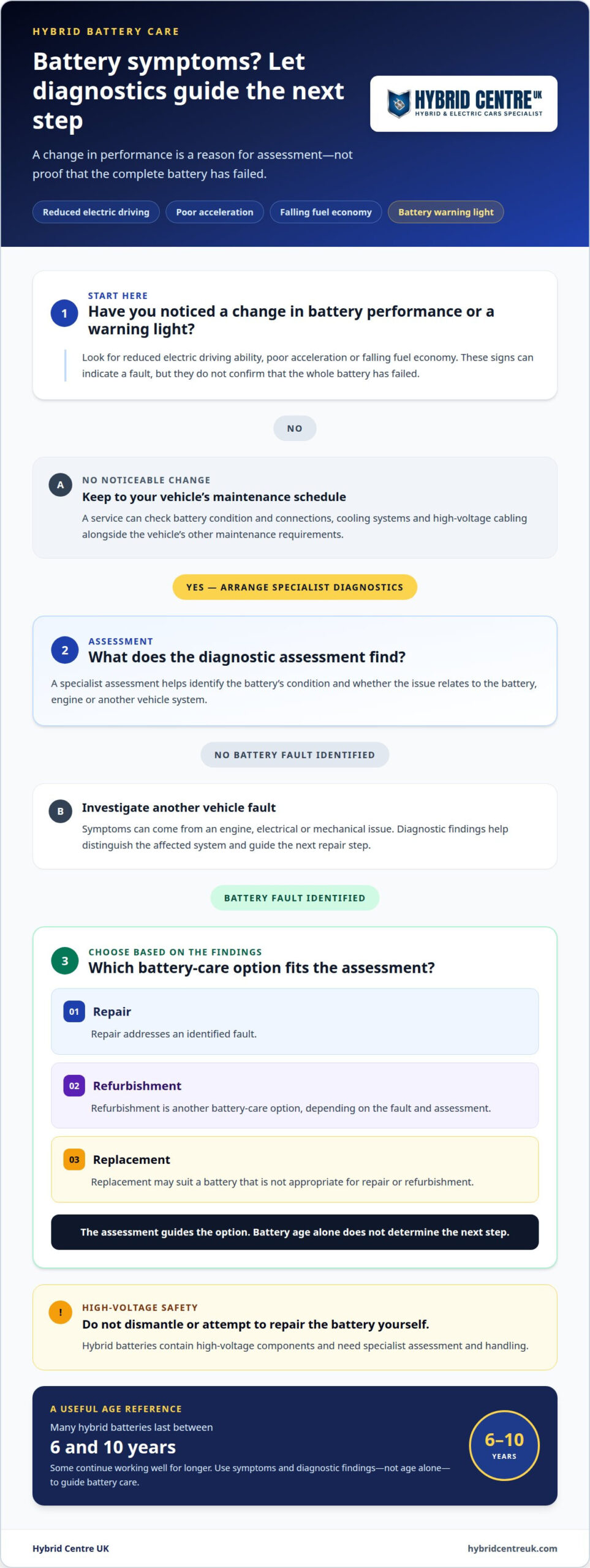
Hybrid batteries are designed for long service, but age and use can affect their performance. Many last between six and ten years, and some continue working well for longer. Reduced electric driving ability, poor acceleration, falling fuel economy or a battery warning light can indicate a fault. These signs call for assessment, not an assumption that the complete battery has failed.
A diagnostic assessment helps identify the battery’s condition and guide the next step. Depending on the fault, options may include hybrid battery repair, refurbishment or replacement. Repair addresses a fault, while refurbishment is another battery-care option. Replacement may suit a battery that is not appropriate for repair or refurbishment. The assessment helps determine which option fits the vehicle.
Hybrid batteries contain high-voltage components, so don’t dismantle or attempt to repair them yourself. A specialist can assess the system and explain the work required. Investigating changes in performance or warning lights can help distinguish a battery issue from another vehicle fault. Battery care also goes hand in hand with routine servicing: a well-maintained petrol engine and hybrid system support efficient running. Choose the service based on symptoms and diagnostic findings, not battery age alone.
Advanced diagnostics and electrical work
Hybrid vehicles combine petrol engines, electric motors and high-voltage battery systems. A dashboard warning, poor acceleration, reduced electric driving performance or excessive engine running can signal a fault. Advanced diagnostics help pinpoint whether the issue relates to the battery, engine or another electrical system. The result guides the next repair step instead of relying on symptoms alone.
A diagnostic inspection can assess system faults and battery performance, while electrical work addresses problems affecting vehicle circuits and components. Excessive battery-cooling fan operation or reduced fuel economy can also signal a need for investigation. Technicians can use diagnostic findings and the vehicle’s behaviour to distinguish an electrical fault from a mechanical issue, helping target the work to the affected system.
High-voltage components require specialist handling. Don’t dismantle hybrid electrical systems yourself. A technician can assess the relevant components and carry out appropriate electrical repairs. If a warning light appears or the car’s electric performance changes, arrange an inspection rather than treating it as routine servicing. A final diagnostic scan can check for system faults after service work. Clear findings help you understand what was assessed and which repair addresses the fault.
Mechanical work and MOT service
Hybrid vehicles still rely on mechanical components that need attention alongside their electrical systems. Engine, gearbox, exhaust, brake and suspension faults can affect how the vehicle runs, even when the battery operates normally. Mechanical repairs can address symptoms such as unusual noises, poor acceleration or changes in braking behaviour. A technician assesses the affected system and identifies the necessary repair.
Brakes and suspension support control and stability, while steering and tyres affect handling. An inspection can also cover the petrol engine, transmission and exhaust system. These checks matter for hybrids as well as conventional petrol or diesel vehicles. Report new sounds, vibrations or changes in how the car responds, so the assessment can focus on the concern instead of assuming every symptom is a battery fault.
An MOT service has a different purpose from routine maintenance. MOT testing assesses the vehicle against applicable test requirements, while servicing helps maintain its systems between tests. Passing an MOT does not replace scheduled maintenance or diagnose every developing mechanical issue. If the test identifies a fault, the necessary mechanical repair can be carried out separately. Keeping service and MOT records together helps you track completed work and plan the next maintenance step.
Why hybrid cars need specialist servicing
Hybrid cars combine a petrol engine with electric drive and high-voltage battery systems. Servicing must account for both power sources rather than treating the vehicle as a conventional petrol car. The braking system also needs appropriate checks: regenerative braking works alongside mechanical brakes, so technicians should assess the relevant systems together. Accurate diagnosis helps distinguish an electric fault from a mechanical one.
Choose a technician trained to work on hybrid vehicles, with suitable diagnostic equipment and safety equipment for high-voltage work. Ask whether the technician has the training and equipment needed to work safely on your vehicle. Do not dismantle high-voltage systems yourself. A trained specialist can carry out the required checks and repairs using equipment suited to the work.
Specialist servicing also covers routine needs, including the petrol engine, brakes, suspension and steering. A warning light, reduced electric performance or unusual braking behaviour calls for proper assessment, not guesswork. A final diagnostic scan can help identify system faults after service work. Choose a centre that understands both electric and mechanical systems, then explain any changes you have noticed. For specialist assessment, book hybrid vehicle servicing.
Hybrid Centre UK
Hybrid Centre UK helps hybrid owners maintain their vehicles through servicing and focused assessments. If your car shows a warning light, reduced electric performance or unusual engine behaviour, the team can assess the issue and identify suitable next steps. Depending on the concern, work may include routine car servicing, advanced diagnostics or electrical repairs. Hybrid battery repair, refurbishment and replacement are options when the assessment points to a battery fault.
An assessment can help distinguish a battery concern from a fault elsewhere in the hybrid system. Technicians use diagnostic equipment to investigate symptoms, then carry out relevant repairs or servicing. If your vehicle is due for routine maintenance, a hybrid car service covers scheduled checks. If an electrical issue is affecting performance, targeted diagnostics can identify the system that needs attention.
Arrange an inspection if warning lights appear, acceleration changes or the battery behaves differently. Describe the symptoms and when they occur, such as during starting or electric driving. This gives the technician useful context for the assessment. Hybrid Centre UK can help with battery care, routine servicing and faults involving hybrid electrical systems. Contact the team to discuss your vehicle and the work it needs.
Plan your next step with confidence
Use your vehicle’s service records and any new symptoms to guide the conversation. Note when a warning appears, whether performance changes during electric driving, and any unusual braking or engine behaviour. Clear details help technicians focus their assessment on the systems most likely to need attention.
A hybrid car service should match the vehicle’s maintenance needs and its current condition. Hybrid Centre UK’s technicians can use diagnostic equipment to assess concerns and identify suitable work, whether you need routine maintenance or investigation of a developing fault. Explain what you have noticed and discuss a practical next step without assuming the cause.
Taking action when a change first appears gives you a clearer route to understanding your vehicle’s needs. Discuss your hybrid servicing with Hybrid Centre UK and take the next step towards informed care.
Frequently Asked Questions
Can I take my hybrid to any garage?
Yes, an independent garage can service your hybrid if its technicians have suitable training and equipment for the work. A hybrid car service involves more than general mechanical checks because hybrid systems include high-voltage components. For example, a battery-related warning needs assessment by someone familiar with hybrid systems. Don’t dismantle high-voltage components yourself.
What’s Checked In My Service?
Checks should follow the manufacturer’s schedule and address any symptoms you report. A technician may assess battery connections, fluid levels, braking operation and tyre pressures, then use a diagnostic scan if a warning appears. For example, a service reminder and a battery warning call for different checks. Describe which warning you see and when it appears.
What’s Included?
The work depends on whether your hybrid car service is for interim maintenance or a fuller service. An interim visit can focus on essential condition checks, while a full service may include an air-filter replacement and a final diagnostic scan. The vehicle’s requirements determine the work. A reported fault may need separate diagnosis beyond routine scheduled checks.
What is included in a hybrid car service in the UK?
A full service can assess the hybrid battery, high-voltage cabling, cooling systems, fluids, brakes, tyres, steering and suspension. It may also cover air conditioning, filters, lights, wipers and internal controls. The exact checklist follows the vehicle’s requirements. For example, a technician can check the transmission-fluid level and tyre-pressure monitoring system as part of the inspection.
How often should a hybrid car be serviced in the UK?
Use the manufacturer’s schedule, with a full service generally recommended every 12 months or 12,000 miles, whichever comes first. An interim service is generally recommended every six months or 6,000 miles. The RAC advises a yearly check even if you drive infrequently. Check your handbook for the schedule that applies to your model and driving pattern.
What should I bring to a hybrid service?
Bring the vehicle’s service records and handbook if you have them. The records show previous maintenance and repairs, while the handbook contains the manufacturer’s schedule for your model. This information gives the technician useful context for planning the appointment. If you have digital records, have them ready to share so completed work and relevant service history are easy to review.