
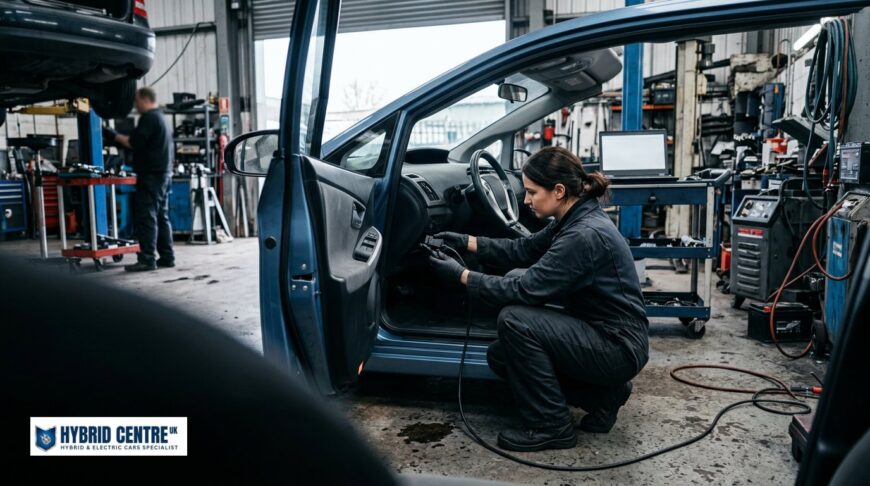

A vehicle diagnostic inspection usually takes 30 to 60 minutes, although investigating fault codes in more depth can take longer. A technician uses diagnostic equipment to check stored faults and relevant vehicle systems, then interprets the results because a fault code can point to a system or symptom without proving that a specific part has failed. The findings help identify what further testing or repair may be needed.
Key Takeaways
- Understand why a diagnostic check can take longer when technicians need to investigate fault codes or assess several systems.
- Learn why a warning light or fault code points towards an issue but may not identify the failed part on its own.
- See how diagnostic findings can guide repair recommendations and help avoid replacing parts by guesswork.
- Find out how checks can inform hybrid battery care, repair or replacement decisions, and the use of suitable hybrid car parts.
How long does a vehicle diagnostic inspection take?
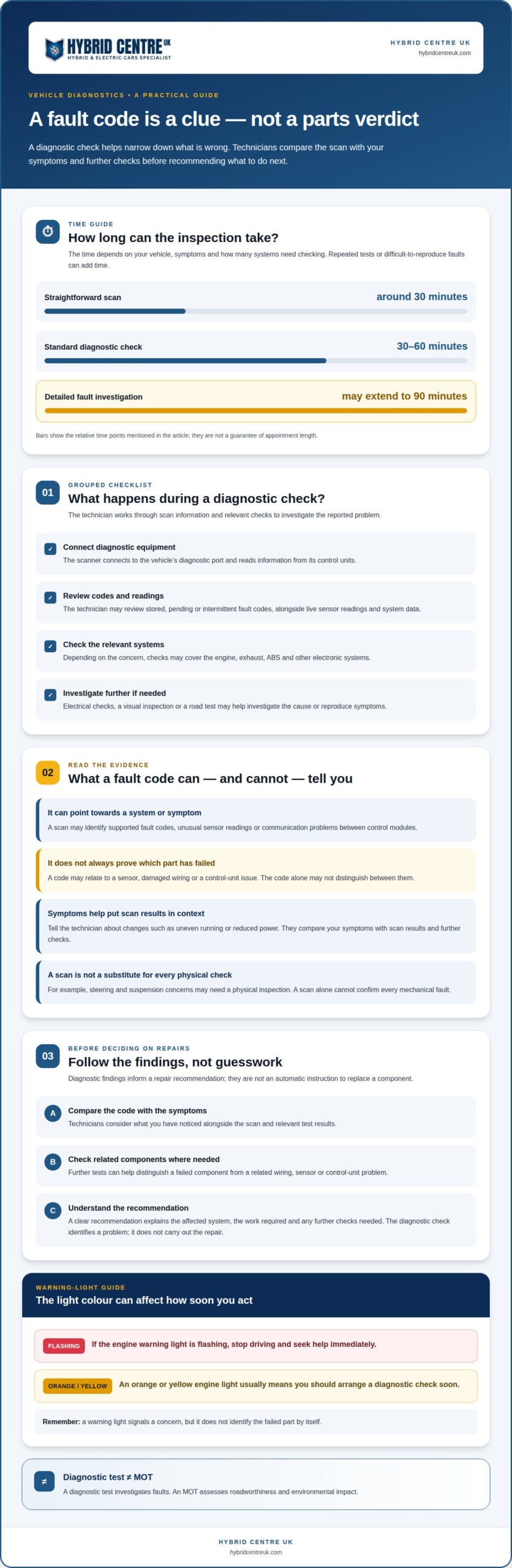
A standard car diagnostic check usually takes between 30 and 60 minutes. A straightforward scan may take around 30 minutes, but investigating fault codes in more depth can extend the appointment to 90 minutes. The time depends on the vehicle, the reported symptoms and how many systems need checking. A vehicle diagnostic inspection may take longer if tests need to be repeated.
The technician connects diagnostic equipment to the vehicle’s diagnostic port and reads information from its engine control unit. The inspection may cover stored or intermittent faults in the engine, exhaust, ABS and other electronic systems. If the scan suggests a wiring or sensor issue, further tests help pinpoint the cause. Several faults, symptoms that are difficult to reproduce or the need to inspect components physically can extend the inspection.
Stop driving and seek help immediately if the engine warning light is flashing. An orange or yellow engine light usually means you should arrange a diagnostic check soon. A warning light alone does not identify the failed part, so test components before deciding what needs attention. A vehicle diagnostic inspection helps assess the problem before you decide on repairs.
A basic scan can show fault codes, but a code may point to a system or symptom rather than confirm which component has failed. For example, it may not distinguish between a faulty sensor, damaged wiring or a control-unit issue. Relying on the code alone can lead to a misdiagnosis or parts being replaced without further checks. A technician interprets scan results alongside your symptoms and further checks. Reproducing an intermittent fault may take additional time.
What can a diagnostic fault code check identify?
A professional OBD2 scan can identify supported fault codes and system data, but it cannot diagnose every fault alone. Technicians interpret results alongside symptoms and physical checks.
Faults without dashboard warnings
A vehicle can have faults affecting performance, fuel economy or reliability without showing a dashboard warning light. Diagnostic equipment may still find stored, pending or intermittent codes, or unusual live sensor readings. Tell the technician about changes such as uneven running or reduced power. These details help guide further checks even when the dashboard appears clear.
Faults and components identified
Depending on the vehicle, diagnostic checks can identify engine misfires, sensor faults, incorrect fuel mixtures and communication problems between control modules. They may also detect ABS sensor faults and brake-pressure issues. Electronic steering or suspension faults may appear in sensor data, but a scan cannot replace a physical inspection. Technicians assess the reported fault alongside the condition of relevant components.
Dashboard warning lights and fault codes
A warning light signals that a system has detected a concern, while its code helps locate the affected system. OBD monitors engine components, emissions controls and sensors, then communicates findings through diagnostic trouble codes, according to the North Carolina Department of Environmental Quality. A code does not always prove that a particular part has failed. Related wiring or a sensor, for example, can trigger a code.
What happens after fault identification
After identifying a code, technicians compare it with your symptoms and relevant test results. Further checks can help distinguish a failed component from a wiring, sensor or control-unit problem. The findings inform a repair recommendation, while physical inspection remains important for steering and suspension concerns. A scan alone cannot confirm every mechanical fault, so the next step depends on the system and the evidence.
What happens during a vehicle diagnostic test?
A technician connects diagnostic equipment to your car’s control unit and checks relevant system data. A diagnostic test investigates faults; an MOT assesses roadworthiness and environmental impact.
What the test involves
The technician connects a scanner to the vehicle’s diagnostic port and reads stored information from its control units. They may review error codes and live sensor readings, then carry out electrical checks or a visual inspection. A road test can help reproduce symptoms when needed. A standard check usually takes 30 to 60 minutes, but detailed investigation may take longer.
What a diagnostic test can reveal
Results can show stored, pending or intermittent fault codes, system voltages and pressures, as well as communication problems between modules. For example, an engine light may relate to an emissions sensor, but the code alone will not confirm which part has failed. A technician compares the data with your reported symptoms to decide whether further testing is needed.
When to book a diagnostic test
Book a test if a warning light appears, your car enters limp mode or you notice problems such as misfiring or reduced power. A diagnostic check can also reveal faults stored in a used car’s memory after purchase. If your car has no symptoms, routine UK maintenance focuses on an annual MOT and service rather than a diagnostic test. Arrange an inspection when a specific fault needs investigating.
How to understand diagnostic findings and repair recommendations
A diagnostic result informs a repair decision; it is not an automatic instruction to replace a component. The vehicle computer records fault information, which technicians compare with your symptoms and additional test results. This helps distinguish a failed part from a related problem elsewhere in the system.
For example, a drivetrain fault code may identify a transmission control system concern without proving that the gearbox itself has failed. A technician can assess related components, wiring and system data before recommending work. Ask which test supports the diagnosis and how the proposed repair addresses the reported fault.
A clear repair recommendation explains the affected system, the work required and any further checks needed. A car diagnostic check identifies a problem; it does not carry out the repair. The recommendation should list the proposed work separately so you can understand what is included before agreeing.
If testing identifies a specific component and confirms its condition, replacing it may be appropriate. If the results are inconclusive, further testing may be needed instead of changing parts by guesswork. This distinction matters because a fault code can describe a symptom rather than its root cause.
Once you approve the proposed work, technicians carry out the agreed repairs and can check the vehicle afterwards. For example, they may repeat a system scan or test the car to see whether the original fault remains. Use the findings to understand the repair, and agree to clearly described work rather than a parts list without supporting checks.
Hybrid battery checks, replacement and parts
Hybrid battery diagnostics help assess battery health if a dashboard warning appears, performance changes or the vehicle behaves differently. A technician can use diagnostic equipment to review fault information and investigate whether the concern relates to the battery or another part of the hybrid system. A warning code can point to a system without proving that the battery itself has failed.
Hybrid battery repair may be suitable when testing identifies a fault that can be addressed without replacing the complete battery. Replacement may be appropriate if the battery’s condition or performance indicates it is needed. The recommendation should follow the test findings, not an assumption based only on a warning light or reduced fuel efficiency.
Checks can also help distinguish battery concerns from possible electrical faults, sensor issues or other vehicle problems. Technicians interpret the results alongside your symptoms and the vehicle’s condition. This gives you a clearer basis for deciding whether repair, replacement or further investigation is the appropriate next step.
Hybrid car parts support repairs when a component needs attention. Hybrid Centre UK sells hybrid batteries and car parts. Matching the required part to the vehicle and diagnosis helps keep the repair focused on the identified fault. For hybrid owners, accurate testing is a practical first step towards informed battery maintenance and a suitable repair plan.
Hybrid Centre UK: Advanced Diagnostics
Hybrid Centre UK provides Advanced Diagnostics for drivers who need a fault investigated rather than relying on a warning light alone. Diagnostic equipment supports checks across vehicle systems, helping technicians assess symptoms and identify where further testing may be useful. This gives you clearer findings before you decide which repair work to approve.
For hybrid owners, Hybrid Centre UK provides hybrid battery care, repair and replacement. A battery warning, reduced performance or recurring electrical issue can justify a closer assessment, but a warning alone does not establish that the battery needs replacing. Testing helps distinguish battery concerns from other electrical faults before you decide on the next step.
Electrical Work is relevant when checks point to a wiring, sensor or other electrical issue. For example, a drivetrain fault code may relate to a control system without confirming that a gearbox component has failed. Further investigation can clarify the fault and inform a suitable repair recommendation.
Car Service can complement diagnostics when your vehicle needs maintenance as well as fault investigation. Get in touch if a warning light remains on, a fault returns or the car’s performance changes. Hybrid Centre UK can assess the reported concern and explain the next steps based on its findings.
Contact Hybrid Centre UK to discuss a diagnostic check for your vehicle.
Frequently Asked Questions
What are dashboard warning lights?
Dashboard warning lights alert you to a detected issue or change in a vehicle system. An engine light, for example, can indicate a fault that needs investigation, while ABS or airbag warnings point to different systems. The symbol shows where attention may be needed, but does not explain the cause by itself. A technician interprets it alongside the vehicle’s symptoms.
What do car diagnostics tests tell you?
Car diagnostic tests can show whether a recorded issue is active, pending or intermittent, and may reveal related sensor readings. Data from an exhaust sensor, for example, can help technicians investigate an emissions or engine-running concern. The results guide further checks but do not automatically confirm which part needs replacing. The vehicle’s symptoms and test results together help determine the next step.
Can a professional clearing fault codes fix the problem?
Clearing a code can remove a warning caused by a temporary issue, but it does not repair an underlying fault. For example, a code may clear after low battery voltage or a loose connection has been addressed. If the fault remains, the code or warning can return. A technician should investigate the cause before resetting the engine warning light, rather than treating code removal as a repair.
How often does my car need to have diagnostic testing?
Book diagnostic testing when symptoms or a warning indicate a fault, rather than treating it as a substitute for routine servicing. Hybrid battery inspection is recommended every 10,000 to 15,000 miles or annually. Routine UK maintenance should include an annual MOT and vehicle service. Follow manufacturer instructions for your vehicle’s maintenance schedule, and arrange diagnostic checks when a specific concern needs investigation.
What are car diagnostic codes?
Car diagnostic codes are messages stored by a vehicle’s computer when it detects a fault. The first letter points to a broad area: B relates to body systems, C to chassis, P to powertrain, and U to wiring or sensors. A P code, for instance, may concern the engine or transmission. The code narrows the investigation but does not prove that a particular component has failed.
What does a full car diagnostic include?
The scope depends on the vehicle and the reported fault. A full check may scan available control modules, review stored information and live data, and include electrical or voltage checks. Technicians may also carry out a visual inspection and road test where needed. The modules available for testing vary by vehicle, so checks focus on systems relevant to its symptoms and diagnostic findings.