

A warning light is a prompt to act, not a diagnosis.
Hybrid car warning lights diagnosis starts with the colour and symbol: red generally means stop somewhere safe, while amber means the fault needs attention soon. Green or blue usually indicates that a system is operating or switched on. A limited-power warning can mean the vehicle’s electric performance is restricted.
If a warning stays on, returns or appears alongside sluggish performance, its meaning depends on the vehicle and the fault recorded in its systems. The dashboard alone may not identify the cause. Symbols and their positions vary by model, so consult your handbook to identify the indicator. This guide covers common hybrid, fault and limited-power warnings, how to judge their urgency, what to do next and when professional diagnostics can help pinpoint whether the issue concerns the battery, electrical system or another component. It also explains why a warning that clears should not automatically be treated as resolved, and how workshop testing can distinguish a stored fault from a temporary alert.
Key Takeaways
- Use the warning-light colour and symbol to judge urgency, and consult your vehicle handbook because indicators can vary by model.
- A “Check Hybrid System” alert can relate to battery capacity, cell voltage or an electrical fault; the light alone won’t identify the cause.
- Limited electric power or changes in vehicle performance can signal a fault that needs diagnostic testing, even if the warning comes and goes.
- Professional diagnostics can help pinpoint whether the next step is hybrid battery repair, electrical work or another type of repair.
What’s Up With That “Check Hybrid System” Warning?
A “Check Hybrid System” message can point to a battery fault, an electrical issue or a control-system reading. The message alone cannot identify the failed component. Testing is needed to distinguish battery condition from related faults.
Causes of battery and electrical warnings
A hybrid battery warning can indicate reduced battery capacity, uneven cell voltage or a fault in wiring or related electrical components. Similar dashboard messages can accompany different problems. For example, a poor electrical connection may disrupt readings, while battery degradation can reduce stored charge. A technician considers the warning alongside the vehicle’s symptoms and recorded faults.
Battery capacity and cell-voltage checks
Battery capacity describes how much charge the pack can retain, while cell-voltage checks compare readings across its sections. A technician looks for weak or uneven readings rather than relying on the dashboard symbol alone. This helps show whether reduced performance relates to declining capacity, a cell imbalance or another electrical-system fault.
Battery degradation and early detection
Battery degradation is a gradual decline in battery condition. It can lead to reduced electric assistance, changing charge behaviour or sluggish acceleration. These symptoms can have other causes, so an assessment compares vehicle performance with battery readings and recorded faults. If poor performance returns during a drive, a warning that has disappeared still deserves attention.
Hybrid warning lights and MOT failure
A hybrid warning light alone does not determine whether a vehicle will pass its MOT. The outcome depends on the underlying fault and the condition of items examined during the test. For example, a warning linked to a fault affecting a tested system may matter to the result. Diagnosing the cause before your MOT gives you clearer information than simply clearing the display.
Hybrid Fault and Limited Electric Power Indicators
A hybrid fault indicator points to a problem detected within the vehicle’s hybrid system. A limited electric power alert means electric performance is restricted, but the symbol alone cannot identify the cause.
General and electrical fault warnings
A general hybrid warning can cover faults across the battery, electrical components or control systems. The same dashboard message can accompany different symptoms, so it cannot confirm which part needs attention.
When a hybrid system fault occurs, the vehicle may switch to petrol-only operation. You may also notice reduced acceleration or sluggish running. For example, a 2018 Hyundai Ioniq Blue Hybrid was reported to show a hybrid warning and run sluggishly. A change in how the car drives helps technicians assess the fault alongside its warning message.
Hybrid fault symptoms and diagnostic codes
Diagnostic trouble codes are records generated when a vehicle detects a system fault. They give a technician a starting point for investigating the warning, rather than identifying a repair by themselves. The code needs to be interpreted alongside the vehicle’s symptoms and system readings.
A limited electric power indicator can signal reduced electric performance, so consult the handbook for what it means on your model. Depending on the vehicle, it may stop, so treat the alert as a sign to act rather than assume normal electric performance will continue. Some hybrids may rely on petrol when the hybrid system has a fault. Dashboard symbols and their positions vary by model, so consult your handbook to identify the indicator.
Dashboard Warning-Light Colours and Severity
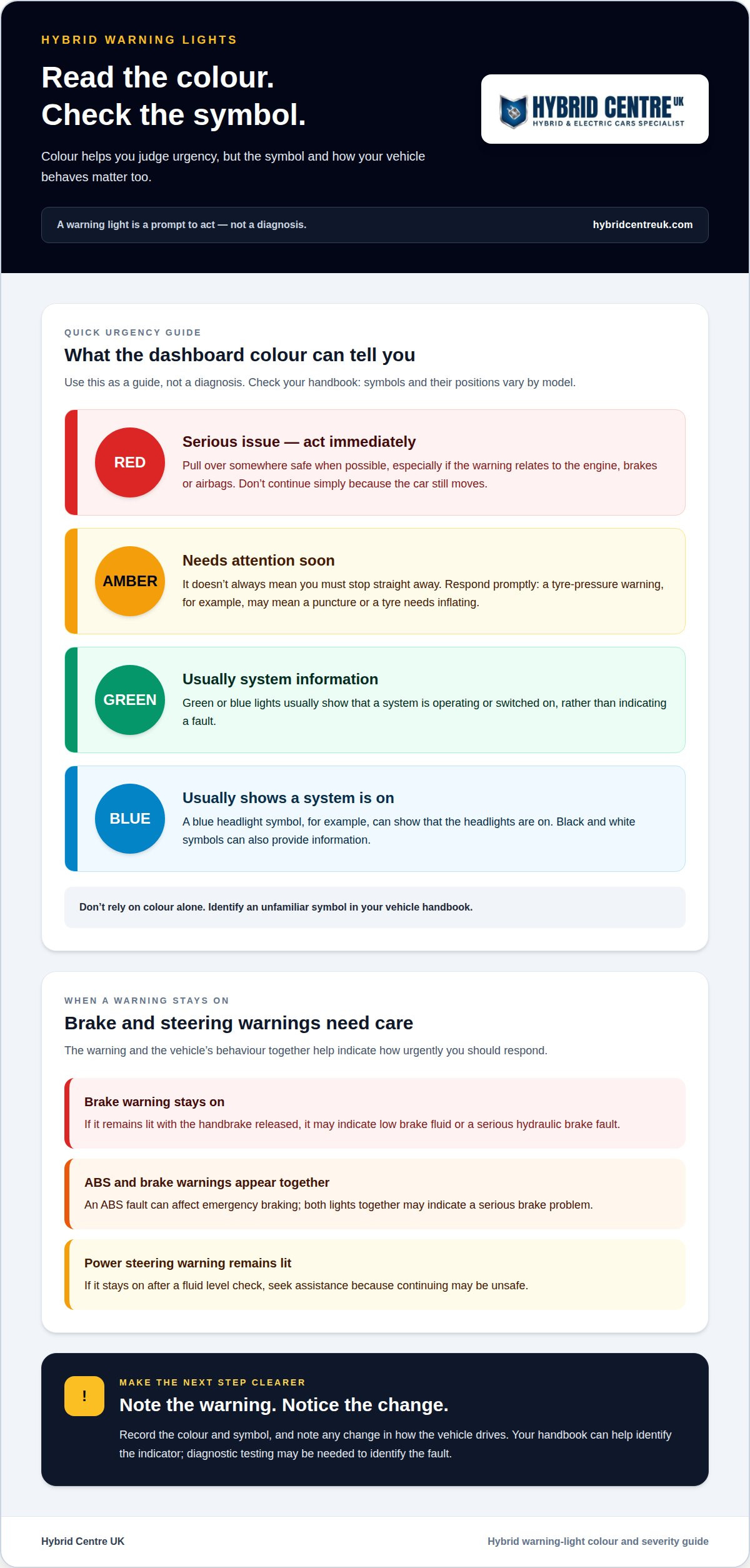
Dashboard colours offer a quick guide to urgency, but the symbol matters too. Check your vehicle handbook because warning symbols and their positions vary between models.
A red light signals a serious issue that needs immediate attention. If one appears, pull over somewhere safe when possible, especially if it relates to the engine, brakes or airbags. Don’t continue driving simply because the car still moves. A red hybrid warning needs prompt attention, and the underlying fault may require professional assessment.
Amber or yellow means a fault needs attention soon, but it doesn’t always mean you must stop straight away. A tyre-pressure symbol, for example, may indicate a puncture or a tyre that needs inflating. Tyre pressure can affect braking distance and handling, so respond promptly rather than treating the warning as routine.
Green and blue lights usually provide information rather than signal a fault. A blue headlight symbol, for example, can show that the headlights are on. Black and white symbols can also provide information. Use your handbook to identify an unfamiliar indicator instead of relying on colour alone.
- Brake warning: If it stays on with the handbrake released, it may indicate low brake fluid or a serious hydraulic brake fault.
- ABS and brake warnings: An ABS fault can affect emergency braking; both lights together may indicate a serious brake problem.
- Power steering warning: If it remains lit after a fluid level check, seek assistance because continuing may be unsafe.
When a warning appears, note its colour, symbol and any change in how the vehicle drives. A red brake warning with an ABS light calls for a different response from a blue headlight indicator. Your handbook can help identify the symbol; diagnostic testing may be needed to identify the fault.
Professional Hybrid Diagnostics and Repairs
Professional hybrid car warning lights diagnosis starts with recording symptoms, reading stored fault codes and testing relevant systems. The technician explains each finding before recommending battery, electrical, engine or mechanical work. A code guides the investigation; it doesn’t automatically prove that a particular component has failed.
Advanced diagnostic equipment can access vehicle control systems and reveal faults that a dashboard symbol cannot identify. The technician compares codes with live readings and your account, such as reduced power or a returning warning. This helps distinguish a battery problem from a wiring issue or a fault elsewhere in the vehicle. A diagnosis of hybrid car warning lights should connect test results to the symptoms you noticed.
- Record: Note the displayed warning, when it appeared and any change in driving behaviour.
- Scan: Read and record relevant diagnostic trouble codes before clearing them.
- Assess: Compare the codes with system readings and inspect the areas they identify.
A Hyundai Ioniq owner reported a “post catalytic fuel system trim too lean” error. That wording points towards an engine or emissions-related issue, not automatically a hybrid battery fault. Further checks establish the cause and whether engine repair or other mechanical work is appropriate.
Technicians should explain which system raised the fault, what testing showed and what repair follows. If battery readings indicate a battery issue, battery repair or replacement may be considered. If tests point to an electrical connection or another component, the repair should address that specific fault. A warning disappearing does not show that the vehicle has returned to normal. Recorded codes and test results give you a clearer basis for deciding on the next repair.
Hybrid Centre UK
Hybrid Centre UK in Greenford can help when a dashboard warning stays on, returns or appears with a change in how your car drives. Its Advanced Diagnostics help technicians investigate the cause and explain which repair may be relevant, giving you a clearer route from warning light to next step.
For an assessment, share your vehicle’s make and model, the dashboard message and when it appeared. Describe changes such as sluggish acceleration, reduced electric power or a warning returning after a restart. These details help technicians relate the vehicle’s behaviour to diagnostic findings and focus their checks.
The next step depends on the test results. Hybrid Centre UK provides:
- Advanced Diagnostics to investigate dashboard messages and recorded faults.
- Hybrid Battery work when findings point to a battery-related issue.
- Electrical Work when testing identifies an electrical-system fault.
- Car Service for maintenance suited to the vehicle’s needs.
A warning can relate to different systems, so repair recommendations should follow the findings. A battery-related code alone does not establish that the battery needs replacing. Technicians assess recorded faults alongside symptoms and explain whether battery, electrical or service work is appropriate. This makes hybrid warning light diagnosis part of a considered assessment, not a decision based only on the dashboard symbol.
Based in Greenford, Hybrid Centre UK is a local option for drivers in West London needing professional hybrid fault assessment. If a warning remains illuminated, returns or comes with poor performance, an assessment can help clarify the next step.
Contact Hybrid Centre UK to discuss your hybrid warning light.
Frequently Asked Questions
Car Warning Lights: What Do They Mean?
Warning lights show that a vehicle has detected a condition needing attention or indicate that a feature is active. Read the symbol and colour together, then check the vehicle handbook for its model-specific meaning. Note whether the light appears at start-up, stays illuminated or returns while driving. These details help distinguish a normal indicator from a warning that needs assessment.
What Kinds of Things Cause Hybrid Issues?
Hybrid issues can arise from battery capacity or cell-voltage problems, electrical faults, or faults in other vehicle systems. A check-engine light, for example, can relate to anything from a loose fuel cap to an engine or emissions-system problem. One warning symbol cannot identify the failed part. The vehicle’s symptoms and diagnostic findings help narrow down which system needs attention.
What Do Common Hybrid Car Dashboard Warning Lights Mean?
A red warning generally signals a serious problem, while an amber symbol usually indicates an issue needing attention soon. Green or blue lights commonly show that a feature, such as headlights, is active. Other symbols identify specific systems: a tyre-pressure light can point to a puncture or low pressure, while an ABS light relates to the anti-lock braking system. Check your handbook for the exact symbol.
What Does the Hybrid System Warning Light Indicate?
A hybrid system warning means the vehicle has detected a fault within or affecting its hybrid systems, but the dashboard message does not identify the cause. Battery, electrical or related system faults can produce warnings, and performance may change. If the light disappears and later returns, the fault may still be present. A professional assessment can relate the warning to recorded faults and vehicle behaviour.
How Can a Professional Diagnose a Hybrid Warning Light Using Diagnostic Equipment?
A professional connects diagnostic equipment to read the vehicle’s stored fault codes and system data. They compare the results with the warning message and symptoms you describe, then carry out checks on the system identified. A code is evidence for diagnosis, not automatic proof that a component needs replacement. The technician should explain the findings and how they support any recommended repair.
Can I Drive a Hybrid Car with a Warning Light On, and Which Lights Mean Stop Immediately?
Stop somewhere safe for a red warning, a hybrid battery temperature warning, or a brake warning accompanied by poor braking. Spongy brakes or a pedal sinking to the floor are reasons to pull over and call your breakdown service. An amber light may not require an immediate stop, but its meaning matters. Check your handbook and respond promptly, particularly if the vehicle’s performance changes.